The Definition Page
What Is Transformational Tourism?
Transformational tourism is travel undertaken—and designed—for durable inner change: shifts in perspective, values, and behavior that outlast the trip itself. Not a better holiday; a different person coming home.
The definition above is a working definition of practice, stated plainly: no standards body defines the term, and no certifier verifies it. What holds it up is a real research literature, a real industry—and, older than both, the oldest idea in travel: that the journey is a device for becoming someone else.
How to use this page
- Studying or researching? Start with the working vocabulary and the numbered references—every empirical claim resolves to a primary source.
- Reporting on the industry? The criticism section states the strongest objections and the one finding that would falsify this site’s premise.
- Designing journeys? The mechanics live on the design page; the evidence behind them on the science page.
- Planning your own? Read when it happens—and when it cannot before anything else on this site.
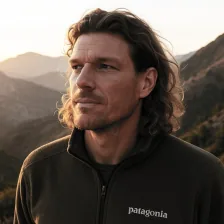
By Steven Keen
MSc Responsible Tourism Management (in progress), GSTC- and ICRT-certified
20 min read Updated on Sources verified on
One Field, Two Names
The field runs under a confusing pair of near-identical terms, and the split is worth thirty seconds because it maps exactly onto who is speaking. Scholarship says “transformative tourism”—the word inherited from Jack Mezirow’s transformative learning theory, which since 1978 has described how adults revise the frames of meaning they see the world through.[1] The academic line runs from Mezirow through a mobilities literature on how travel occasions such revisions[2] to Reisinger’s 2013 CABI volume, the first book-length collection on the subject.[3]
The industry says “transformational travel.” Its economic charter is Pine and Gilmore’s The Experience Economy (1999), which argued that beyond staging experiences lies a final offering—guiding transformations—in which the buyer of the change is, in their formulation, the product.[4] The Transformational Travel Council organizes designers and operators around that promise, framing travel “as a practice and process rather than a product.”[5]
There is also a deliberate absence worth noticing. The world’s official statistical machinery defines tourism as “a social, cultural and economic phenomenon which entails the movement of people to countries or places outside their usual environment”[6] —journeys measured entirely by where bodies go and what they spend. Nothing in the definitional canon asks whether the traveler comes back different. Transformational tourism lives precisely in that silence: it is the attempt to name, design, and eventually measure the one outcome the industry’s own vocabulary does not record—a change not in the visitor’s location but in the visitor’s usual self.
This resource treats the two names as one subject, uses each in its home register—and keeps the economic frame and the scientific one carefully apart, because the gap between them is where the overselling lives (see the critique).
The Neighboring Terms—and Why They Are Not This One
Because the field is young, half its confusion comes from the labels camped next door. Wellness tourism works on the body’s state—spas, springs, sleep, movement—and however premium the setting, a state that must be topped up is restoration’s business, not transformation’s; its true neighbor is soft travel. Spiritual tourism is defined by its domain (sites and practices of the sacred), not its outcome: a spiritual journey can be transformational, but visiting a monastery no more guarantees inner change than visiting a library guarantees learning. Educational travel—the study term, the exchange year—is the Grand Tour’s institutional descendant and the form most likely to transform by accident rather than design.
Two more labels deserve blunter treatment. “Meaningful travel” is a marketing umbrella with no theory under it—a word that gestures at this field’s territory while committing to none of its claims, which is precisely its commercial appeal. And voluntourism is the service journey’s commodified form, sold on the traveler’s becoming with the host community as backdrop; its failure modes are documented in depth across our sister resources, and no journey that harms its hosts earns the word transformation on this site.
The Oldest Idea in Travel
Travel-as-transformation did not wait for the research. The pilgrimage—the Camino de Santiago has been walked for over a thousand years—is a journey whose declared product is the pilgrim’s changed self, not the destination. And it is not a museum piece: the Pilgrim’s Reception Office in Santiago recorded more than half a million arriving pilgrims in 2025 alone,[7] the great majority on foot—many after weeks on the road—for motives the statistics file under “religious and other.” The Grand Tour of the seventeenth to nineteenth centuries sent young Europeans abroad explicitly to be formed: tourism historiography treats it as a key phase in the history of travel precisely because its itinerary was a curriculum—a circuit of cities, tutors, and prescribed encounters—and coming home unchanged meant the Tour had failed.[8] The modern descendants keep the architecture and drop the vestments: the gap year is a secular Grand Tour, the sabbatical journey a pilgrimage with the shrine removed, the walking retreat a monastery on a weekly rate. What the Camino’s resurgence suggests[7] is that when institutions stopped prescribing the transformational journey, people went looking for it on their own—and found the oldest route still open.
Sociology mapped this territory before the industry named it. Erik Cohen’s 1979 phenomenology of tourist experiences—still the field’s most quoted typology—arranged travelers along a spectrum of how deeply the trip engages what he called their “center”: from the recreational mode, where travel merely restores, through experiential and experimental modes, to an existential mode in which the traveler’s center of meaning lies elsewhere and the journey toward it functions like a pilgrimage.[9] Read in Cohen’s terms, transformational tourism is the deliberate attempt to move a trip up that spectrum—and his typology quietly supplies the field’s most useful warning: most travelers, most of the time, are in the recreational mode, and no itinerary can force them out of it.
What is genuinely new is the reversal of attention: for most of tourism’s industrial century, the product was the destination and the traveler was the constant. Transformational tourism turns the camera around—the destination is the instrument, and the traveler is the work-in-progress. The research literature (next page: the science) is the attempt to say precisely how that instrument works, and when it does not.
The Shapes It Takes
Transformational travel is not one product but one architecture wearing six costumes. Every recurring form pairs separation from the familiar with a demanding middle and a return that has to be worked—the same three-act structure the anthropology of ritual described a century ago. What differs between the forms is which element carries the load.
The pilgrimage
The oldest form and still the most legible: a long route, walked, toward a destination whose real cargo is the walker. The Camino’s 530,775 arrivals in 2025[7] make it the largest living laboratory of intentional journeying in the Western world—and its design (effort, duration, strangers becoming companions, a fixed endpoint) remains the template every other form borrows from.
The wilderness journey
Here the demanding middle is carried by landscape and exposure: multi-day treks, deserts, high country, open water. The active ingredient the research keeps isolating is awe—the emotion of encountering something vast that the mind cannot immediately file—and it is the best-evidenced mechanism on the science page.
The immersion
A season inside another way of living—a language learned in its kitchen, a harvest worked, a village winter. The separation here is social, not geographic: the traveler surrenders the tourist role itself, and with it the insulation that keeps ordinary trips from asking anything. Depth of time matters more than distance; a month nearby outperforms a week far away.
The service journey
Travel organized around work for a place or its people. Done honestly it is a genuine engine of perspective change—and it is the form with the sharpest failure mode, because a journey purchased for one’s own becoming can quietly spend a community as raw material. The gate test lives on our sister sites: when helping helps, and when it harms.
The retreat
The engineered form: a fixed site, a bounded stay, a program—silence, practice, instruction—that concentrates the demanding middle into days rather than weeks. Hospitality research has begun studying retreat centers precisely as designed transformative environments,[10] which makes the retreat the form where the gap between honest design and staged epiphany is easiest to inspect.
The threshold journey
The trip that marks a life transition—after the diagnosis, the divorce, the degree, the retirement. Its power comes less from the itinerary than from the timing: the traveler arrives already between identities, and the journey gives the passage a shape, a duration, and a witness. Most reports of travel that “changed everything” turn out, on inspection, to be this form.
Choosing between the forms is a diagnostic act, not a style preference. The useful question is not “which trip looks like me” but “which question am I carrying”—transitions want thresholds; abstraction about another way of living wants immersion; a life gone flat wants wilderness and awe; and plain exhaustion wants none of these yet. Depletion is a restoration problem, and restoration has its own site: start at softtravel.com, then come back when the question has changed.
When It Happens—and When It Cannot
The conditions under which travel actually changes someone are narrower than the brochures imply, and naming them is the most useful thing a definition page can do. The first condition is readiness. Mezirow’s entire theory begins not with an experience but with a disorienting dilemma—a moment when a person’s existing frame of meaning visibly fails them—and a frame does not fail on command.[1] Travelers who arrive mid-question (between careers, after a loss, at the edge of a decision) have a live frame under load; travelers who arrive content are, in Cohen’s terms, in the recreational mode,[9] and there is nothing wrong with that—it is simply a different trip.
The second condition is voluntary difficulty. Every durable form keeps some friction the industry would normally engineer away: distance walked rather than driven, language not spoken, comfort deferred, solitude unfilled. Difficulty is not the point—it is the solvent. A trip sanded perfectly smooth gives the existing frame nothing to catch on, which is why the most reliably transformational journeys often photograph worse than restorative ones.
The third condition is a witness. Nearly every durable form builds one in—the companion on the trail, the host family, the community of strangers walking the same direction, the guide who asks the evening question. Change that no one sees has a short half-life; saying the new thing out loud to another person is often the first act of actually meaning it. Solo journeys transform too, but the successful ones almost always acquire witnesses en route—which is one of the quiet reasons the pilgrimage outperforms the resort.
The fourth condition is capacity—and this is where the boundary with our sister site does real work. A depleted nervous system defends its frames; it has no budget for revising them. Restoration first, then challenge: arrive rested or build the rest into the journey’s first act (softtravel.com is the manual for that half). And the last condition sits after the trip entirely: integration, the unglamorous weeks at home where an insight either becomes a changed Tuesday or evaporates—the working half of the design page.
One honest caution. “Arrive mid-question” does not mean “travel instead of help.” A journey can hold a life transition; it cannot substitute for medical or psychological care, and a person in acute crisis needs the latter first. This site describes what travel can do—it does not prescribe it as treatment.
The Boundary with Soft Travel—State vs. Trait
This site has a sister resource, softtravel.com, and the two are routinely confused—both are about what travel does to the traveler. The boundary is precise, and both sites state it identically:
| Soft travel | Transformational tourism | |
|---|---|---|
| Works on | State—the traveler during the trip | Trait—the traveler after the trip |
| The mechanism | Restoration: attention recovers, stress falls | Revision: frames of meaning change under challenge |
| Time signature | Fades within weeks; must be repeated[11] | Persists; cannot be repeated the same way twice |
| Feels like | Comfort, ease, softness | Often discomfort first—the disorienting dilemma |
| In one image | The trip’s weather | The trip’s geology |
The two are not rivals; they are sequential. A depleted traveler cannot do the reflective work transformation requires—restoration is the precondition, challenge is the trigger, and integration is the harvest. That relationship has its own page: Soft Travel & Transformation.
Rule of thumb: if the trip’s benefit needs to be topped up next year, it was restoration—a soft-travel outcome, valuable and repeatable. If you cannot un-see what the trip showed you, it was transformation.
The distinction earns its keep at booking time. A traveler who wants restoration and buys a “transformational journey” pays a premium for friction they did not need; a traveler who wants transformation and buys comfort gets a lovely trip that changes nothing and concludes the whole idea was marketing. Knowing which trip you are actually shopping for is the cheapest, most consequential decision in this entire field—and it is made before any luggage is packed.
The Honest Boundary: What the Term Does Not Mean
- No canon, no certifier. No official body defines “transformational tourism” or verifies claims made in its name—including the definition on this page, which is a working synthesis and says so.
- No Wikipedia entity. As of July 2026 neither “transformational tourism” nor “transformative travel” has a standalone Wikipedia article—a fair index of how young the consolidated field is.
- Not a product feature. Transformation is an outcome in a person, not an amenity in a package. A trip can raise its probability; nothing can guarantee it (the critique names what happens when marketing pretends otherwise).
- The evidence is young and mostly self-reported. The science page states exactly what the studies show and where their limits are.
The Working Vocabulary
Nine terms carry most of the field’s weight. Students and journalists meet them scattered across papers and pitch decks; here they are in one place, each with its origin and its working definition as this site uses it.
- Transformative learning
- Mezirow’s theory (1978) of how adults revise the frames of meaning through which they interpret experience—not acquiring new facts but changing the lens that files them.[1] The academic root of the entire field.
- Disorienting dilemma
- Mezirow’s name for the trigger: an experience the existing frame cannot process, which forces the frame itself into view. In travel it is the moment the place stops confirming your expectations and starts contradicting them—the working reason comfortable trips rarely transform.
- Liminality
- From the anthropology of rites of passage: the “threshold” middle state after separation from ordinary life and before return to it, in which identities loosen and become revisable. The structural reason journeys can do what weekends cannot—unpacked on the science page.
- Communitas
- The unusually direct fellowship of people who share a liminal state—strangers on the same trail becoming, for two weeks, intimates. Pilgrims have reported it for centuries; it does much of the quiet work attributed to destinations.
- Peak episode
- The intense, memory-defining moment—a summit at dawn, a night sky, a kindness from a stranger—that retrospective judgment weights far beyond its duration. Peaks are what trips are remembered by; whether they change anyone depends on what happens afterward.
- Integration
- The after-work: the weeks at home in which an insight is either translated into changed routines, relationships, and commitments—or politely forgotten. The industry’s own bodies treat it as the make-or-break phase,[5] and it is the least marketable, least photographed part of the whole enterprise.
- Fade-out
- The well-replicated finding that vacation benefits—mood, energy, health complaints—return to baseline within weeks of coming home.[11] The single most important datum in this site’s vocabulary: it defines what restoration cannot do, and therefore what transformation is for.
- Transformation economy
- Pine and Gilmore’s projected final stage of economic value, beyond commodities, goods, services, and staged experiences: businesses that charge for guiding a customer’s change.[4] The commercial engine of the field—and, as the criticism below argues, the source of its most corrosive incentives.
- State vs. trait
- Psychology’s distinction between how a person temporarily is (state) and how a person durably tends to be (trait). The hinge of this site’s map: soft travel works on states during the trip; transformational tourism aims at traits after it. One sentence, two disciplines, no overlap.
The Criticism, Taken Seriously
A definition page that only defines is advertising. Transformational tourism attracts four serious criticisms, and a resource that wants to be cited has to state them at full strength.
First: it commodifies the self. The critique goes to the field’s economic charter. When Pine and Gilmore named transformations as the economy’s final offering, they also named its unsettling corollary—in a transformation economy, the customer is the product.[4] Critics read the industry’s language of “journeys of becoming” as therapy’s clothes on retail’s body: inner change repackaged as a premium SKU, with the price of admission quietly filtering who gets to become. The honest response is not denial but hygiene—keeping the economic frame and the scientific one apart, which is exactly what this site’s structure does.
Second: the privilege objection. If transformation requires long, distant, unhurried travel, then the deepest version of the good life is gated by money and passport strength. The objection lands—and the field’s own history blunts it without dissolving it: the pilgrimage, the form with the longest record, was for most of its life the poor traveler’s journey, walked because walking was what there was. Duration and intention, not spend, are the active ingredients; a demanding week within one’s own region can out-transform a gilded month. But “can” is doing work in that sentence, and a resource like this one exists partly to keep the field honest about it.
Third: the evidence problem. Most transformation research relies on travelers’ own retrospective reports—the same instrument that memory’s editing distorts. People narrate their trips as turning points because narrative likes turning points; measured months later, many “changed lives” look like changed anecdotes. The field’s own conceptual work has moved toward models and measures rather than testimonials,[12] and this site quarantines the strongest claims on a science page that states the limits alongside the findings.
Fourth: instant-enlightenment marketing. The most visible version of the field is its worst: five-day “life-changing” packages with transformation listed between the airport transfer and the welcome drink. Even the industry’s own council pushes against this, framing transformational travel “as a practice and process rather than a product”[5] —a formulation that, taken seriously, forbids most of the marketing done in its name. This site’s operating rule is stricter still: any operator guaranteeing transformation has, by that guarantee, demonstrated they do not understand the subject.
Transformation, Pointed Outward
There is a version of this field that curdles into self-absorption—the world as a mirror shop, other people’s homes as props for one’s becoming. The corrective is built into the best of the tradition: real perspective change shows up as changed behavior toward the world, or it did not happen. The Grand Tour was judged by the person who came home and what they did there;[8] the pilgrim’s transformation was certified not by the feeling at the shrine but by the life after it.
That is why this site sits inside a network rather than alone. What durable change looks like toward places is the subject of regenerativetravel.org—travel that leaves the destination measurably better. What it looks like as everyday practice is the ground of responsibletourism.com and ethicaltourism.com. A transformation that never leaves the self was a souvenir.
The test, in the end, is Tuesday. Not the summit photograph, not the journal entry written in the departure lounge—the ordinary weekday three months later, and whether anything in it (what you buy, what you defend, how you treat the stranger and the place in front of you) still carries the journey’s fingerprints. Every page on this site is arranged to serve that test, and the sister sites are where its passing shows.
Frequently Asked Questions
What is transformational tourism?
Transformational tourism is travel undertaken—and designed—for durable inner change: shifts in perspective, values, and behavior that outlast the trip itself. It rests on an academic literature (transformative tourism, rooted in Mezirow’s transformative learning theory) and an industry movement (the Transformational Travel Council). No official standard defines it and no certification body verifies it.
What is the difference between transformational and transformative travel?
They name the same field from two directions: scholarship generally says “transformative tourism” (after transformative learning theory), while the industry says “transformational travel.” There is no substantive difference in subject—only in register and origin.
How is transformational tourism different from soft travel?
Soft travel is about the traveler’s state during the trip—restoration, which fades after return and must be repeated. Transformational tourism is about trait change after the trip—transformation, which persists and cannot be repeated the same way twice. Restoration is the trip’s weather; transformation is its geology.
What forms does transformational travel take?
The recurring shapes are the pilgrimage (the Camino de Santiago drew over half a million pilgrims in 2025), the wilderness journey built around awe, the immersion that embeds the traveler in another way of living, the service journey (with real caveats about when helping harms), the structured retreat, and the threshold journey marking a life transition. What unites them is architecture, not scenery: separation from the familiar, a demanding middle, and a return that has to be worked.
Is there a certification for transformational travel?
No. No standards body defines “transformational travel” and no certification verifies it. The Transformational Travel Council frames it as a practice and process rather than a product, and this site treats any operator selling guaranteed transformation as a claim to test, not to trust.
Can a weekend trip be transformational?
Rarely on its own—the architecture (separation, a demanding liminal middle, integration) needs more room than two days usually give, which is why duration recurs across every historical form from the Grand Tour to the Camino. What a short trip can do is plant the disorienting dilemma: the question you bring home and cannot put down. Whether that becomes transformation is decided in the weeks after, not the weekend itself.
Does travel actually change people, according to the evidence?
Sometimes, under specific conditions—and the honest reading is conditional. The research identifies real mechanisms (disorienting dilemmas, liminality, peak episodes) and real cases of durable change, but transformation is neither typical nor guaranteed: most trips restore rather than transform, and measured effects often depend on what happens in the weeks after return. The science page lays out both the mechanisms and the limits.
References
Links go to the original publisher wherever one exists online; print-era sources are cited in full instead. All links verified July 9, 2026.
- Perspective Transformation — Mezirow, J. Adult Education 28(2), 1978, pp. 100-110.
- Transformative travel: A mobilities perspective — Lean, G. L. Tourist Studies 12(2), 2012, pp. 151-172.
- Transformational Tourism: Tourist Perspectives — Reisinger, Y. (ed.), CABI, 2013 - the first book-length collection on the subject.
- The Experience Economy: Work Is Theatre & Every Business a Stage — Pine, B. J. & Gilmore, J. H. Harvard Business School Press, 1999.
- The Transformational Travel Council — transformational.travel - frames transformational travel as “a practice and process rather than a product”.
- Glossary of Tourism Terms — UN Tourism (formerly UNWTO) - the official statistical definitions of tourism and the visitor (IRTS 2008).
- Pilgrim statistics — Oficina de Acogida al Peregrino (Pilgrim’s Reception Office), Santiago de Compostela - the office’s statistics dashboard records 530,775 pilgrims for 2025.
- The Grand Tour: A key phase in the history of tourism — Towner, J. Annals of Tourism Research 12(3), 1985, pp. 297-333.
- A Phenomenology of Tourist Experiences — Cohen, E. Sociology 13(2), 1979, pp. 179-201 - the classic typology whose “existential mode” ends where pilgrimage begins.
- Conceptualizing transformative guest experience at retreat centers — Fu, X., Tanyatanaboon, M. & Lehto, X. Y. International Journal of Hospitality Management 49, 2015, pp. 83-92.
- Do We Recover from Vacation? Meta-analysis of Vacation Effects on Health and Well-being — de Bloom, J. et al. Journal of Occupational Health 51(1), 2009, pp. 13-25 - the fade-out evidence behind the state/trait distinction.
- Tourist transformation: Towards a conceptual model — Pung, J. M., Gnoth, J. & Del Chiappa, G. Annals of Tourism Research 81:102885, 2020.
Steven spent a decade making documentaries in the places tourism forgets—with his work held in the archives of the UN’s International Labour Organization—before he went to live in one: a mountain village on Crete, his home since 2023. He is completing an MSc in Responsible Tourism Management (GSTC- and ICRT-certified) and founded CRETAN®—disclosed wherever it is mentioned.
Read more about this resource →Where to Go from Here
- The Science of Transformative Travel Now the mechanisms: how disorienting dilemmas, liminality, and awe produce the trait change this definition just promised you. Examine the evidence →
- Designing Transformational Travel Turn the definition into practice—what to do before, during, and after a trip so change survives re-entry. Learn the practice →
- Transformational Travel on Crete The conditions you just read about—thresholds, effort, an unperformed calendar—supplied ready-made by one island’s geography. See it applied on Crete →
Explore Our Companion Resources
- softtravel.com You’ve read the trait side of the boundary; this is the state side—restoration during the trip, defined with equal care. (opens in new tab)
- regenerativetravel.org The third question in the vocabulary you just learned—what travel leaves behind in the place, defined and defended. (opens in new tab)
- ethicaltourism.com If transformation should point outward, this defines the outward part—ethical tourism’s five pillars and its three governing questions. (opens in new tab)