Written From the Island
Transformational Travel on Crete
Most destination pages promise you will love the place. This one documents something stranger: why this particular island keeps changing the people who give it enough time—and it is written by one of them. The general prose below is the site’s usual cited register; the parts marked as field notes are first-person testimony, and labeled that way on purpose.
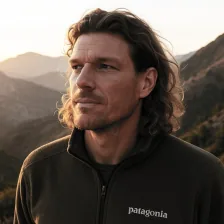
By Steven Keen
MSc Responsible Tourism Management (in progress), GSTC- and ICRT-certified
19 min read Updated on Sources verified on
The Conditions, Supplied by Geography
The research says durable change needs three things travel can supply: a disorienting dilemma, a liminal stretch outside your usual roles, and encounters deep enough to put a crack in the frame. Crete manufactures all three as a side effect of being itself.
Friction: the language is genuinely foreign, the terrain is vertical, the distances lie, and the weather has consequences—the island does not sand its edges down for visitors, once you are an hour from the airports. A calendar that does not perform: the feasts, harvests, and funerals run on the church year and the land’s, whether or not anyone is watching—a visitor is admitted to Cretan life, never sold it. Thresholds everywhere: gorges you enter at one person’s width, a south coast with villages no road reaches, mountain winters that empty the guesthouses—liminal spaces, in the anthropologist’s exact sense, an hour from an international airport.
None of this guarantees anything—the honest boundary applies to islands too. But if transformation has preconditions, few places in Europe stock them this densely. The demand for exactly these conditions is measurable elsewhere in Europe: the Camino de Santiago’s Pilgrim’s Office recorded 530,775 pilgrims in 2025, the great majority of them on foot[1] —hundreds of thousands of people paying days or weeks of footsteps for friction, liminality, and an unperformed calendar. Crete offers the same raw materials without the queue: outside the compressed peak—42% of Greece’s accommodation nights fall in July and August alone[2] —the island reverts to the unwatched life that does the transforming.
There is also an argument for islands as such. An island is a rite of passage with a coastline: the crossing is a built-in separation (no one drifts onto an island by missing an exit), the sea is a wall against the impulse to leave when the middle gets demanding, and the boundedness does something subtle to attention—a territory with edges can be known, and the mind that usually grazes across infinite options settles into depth instead. Crete holds the European sweet spot on this: large enough to be a world—three mountain ranges, two coasts that barely speak, a working interior a tourist decade never touches—and small enough that a season of attention starts to add up to something. Travelers do not outgrow it; they get deeper in. The author is a documented case.
The Thresholds, Documented
Three of the island’s liminal machines are institutions with paperwork—which matters on a site that separates testimony from evidence. They are also, not coincidentally, the three places on Crete where the traveler’s usual self most reliably stops working.
The descent: Samaria
The Samaria Gorge is Europe’s most legible walking rite: a single entrance high in the White Mountains, a main path of 13 kilometers falling through the gorge, and a full route of about 16 to the sea at Agia Roumeli—a village no road reaches, where the walk ends at a ferry dock.[3] The state recognized what it had in 1962, by royal decree;[4] UNESCO added the Biosphere Reserve designation in 1981, on a territory running from the summits at 2,134 meters down to sea level.[5] Read as journey architecture, the gorge is a rite of passage with park infrastructure: you enter at one person’s width, you cannot reasonably turn back past the middle, your arrival is a coastline, and the boat away is the incorporation rite. The season itself enforces the liminal calendar—the park opens roughly May to October, weather deciding the margins.[3] Go at opening time, out of peak, and the descent is four to six hours of enforced solitude with geology for company—the awe mechanism (the science) administered by landscape.
The long line: the E4
Crete carries the E4’s last stretch before Cyprus—the long-distance path runs 12,070 kilometers from Spain to Cyprus, and its route includes the island.[6] On the island it strings the mountain spine and the south coast into a weeks-long walking journey—the closest thing the eastern Mediterranean offers to a Camino, with one honest difference this site refuses to sand down: stretches of the Cretan E4 are poorly waymarked and irregularly maintained, and even the path’s own federation flags sections for it.[6] For a holiday, that is a defect. For a transformational journey, it is almost a feature specification: a route that cannot be walked on autopilot keeps attention nailed to the present tense, and the daily negotiation—with shepherds’ paths, dry riverbeds, and one’s own judgment—supplies precisely the voluntary difficulty the design page prescribes. Walkers who want the full pilgrim architecture add the fixed endpoint: the monastery, the summit chapel, the far cape—Crete has no shortage of destinations that mean something.
Deep time: Psiloritis
The island’s central massif is a UNESCO Global Geopark—designated in the program’s founding year, 2015, across 127,200 hectares—whose scientific headline is an almost continuous rock sequence reaching back to the Permian, around 298 million years.[7] Its karst is punched with caves, one vertical system dropping more than 950 meters; and the ground itself is in motion—Crete drifts away from Europe at 3.5 centimeters a year.[7] These are not trivia; they are dosage information for the best-studied transformation mechanism there is. Awe, the research keeps finding, is triggered by encounters with scales the mind cannot file—and standing in a landscape that has been accumulating since before the dinosaurs, on an island measurably leaving the continent, administers vastness in both time and space at once. The mountain’s other name is Ida: the cave on its flank was, in myth, the nursery of Zeus. Even the stories here are about something enormous being raised in the dark.
The sea, used correctly
The island’s fourth threshold is the one most visitors use backwards. Flown over, the sea is a delay; crossed, it is the journey’s opening rite—the overnight ferry from Piraeus is nine dark hours of nowhere, and travelers who take it consistently report arriving on a different footing than the ones the morning flight decants, because they have felt the distance their transformation is supposed to span. And at the journey’s other end, the south coast’s off-season sea is the cheapest liminal instrument on the island: a swim in October or April, mildly and honestly cold, at a beach with no one on it, is thirty seconds of complete involuntary presence—the body seizes the attention the itinerary has been fighting for all week. Use the crossing to begin and the cold water to punctuate; the island supplies both without a booking.
The Unperformed Calendar
Destinations that live from tourism learn to perform themselves—the folklore evening, the staged authenticity, the harvest re-enacted for the coach party. What makes Crete transformationally serious is the extent to which its real calendar keeps running underneath the performed one, indifferent to audience. The olive harvest bends the whole island’s winter around itself—schools of cousins return to villages, kafenions empty at dawn, and the year’s actual economy happens in the groves whether or not a single visitor is watching. The church year supplies the rest of the spine: name days that outrank birthdays, saints’ days when a village you thought you knew produces a feast from nowhere, Easter—the island’s true new year—arriving with a week of accelerating ceremony that no one is performing for you because no one has time.
For the traveler, the unperformed calendar is an instrument you can only play by yielding to it. You cannot book the funeral procession that stops the street, the tsikoudia that arrives because you happened to be at the next table, the invitation to help because it rained early and the nets are down and you have hands. You can only be findable when they happen—which is the deep argument for basing longer in one place, traveling in the working seasons, and keeping days unscheduled. Every one of those choices trades spectacle for admission; and admission—the moment the place stops treating you as audience—is where the frame-cracking encounters the research describes actually occur.
This is also where the two Cretan sites in this network divide the labor cleanly: how to rest inside that calendar—seasons, villages, the gentle logistics—is the soft travel guide’s territory; what the calendar can do to you, given admission and time, is this page’s.
The Teachers Who Do Not Know They Are Teaching
Transformational programs hire facilitators; Crete deploys people who would laugh at the word. The shepherd who corrects your route with a stick drawn in the dust is teaching terrain-reading and, incidentally, the dignity of knowing one thing completely. The kafenion table is a nightly seminar in disagreement without rupture—voices raised, coffee finished, everyone back tomorrow. The village priest, the woman who runs the guesthouse and the village’s information economy, the returned emigrant who spent thirty years in Melbourne and will translate both the language and the silences—none of them are staged, none can be booked, and all of them out-teach any program the industry could design, for the precise reason the research would predict: they are not performing transformation, they are performing Tuesday, and it is the unperformed Tuesday that cracks the visitor’s frame. Even the island’s music makes the point—the mantinades, improvised rhymed couplets traded across a table, are a living argument that art can be something a community does rather than consumes. Your role with all of these teachers is identical: show up repeatedly, need something honestly, and be corrigible.
Crete in Three Acts—a Journey Architecture
Apply the design page’s rite structure to this specific island and a shape emerges that a traveler can actually book—two to four weeks, three acts, no operator required.
Act I—separation (days 1–4). Arrive slowly if you can arrive slowly—the overnight ferry into Chania or Heraklion makes the crossing a threshold instead of a teleport, a night of open water between the self you left and the island. Then leave the airport cities immediately for one fixed base—a village, a small town on the south coast—and spend the first days doing deliberately little: the market, the fifty words, the same kafenion twice. This is the soft-travel act, and it is load-bearing: the nervous system that will need to do reflective work later gets its restoration here first.
Act II—the demanding middle (the bulk). Now the thresholds, in rising order: a gorge walked alone and early; village evenings where you understand one word in forty and stay anyway; days of the E4 or the coastal paths with a pack, guesthouse to guesthouse; if the season offers it, work—a harvest, a repair, whatever your hands are good for and actually wanted. Keep the minimal daily liturgy—morning walk, unscheduled middle, evening page—and let the plan break at least once; on Crete it will offer to.
Act III—the worked return (the last days). Do not end at a departure gate sprint. End somewhere with a horizon—the south coast is built for it—with the journal and the question you brought, and write the one sentence you could not have written before the trip. Peak episodes cluster late; give the ending the emptiness it needs to land. Then go home and run the ninety days: the island’s work is finished, and yours begins.
Difficulty Settings
The architecture scales to readiness, and pretending otherwise would violate this site’s own rules—a traveler pushed past capacity gets an ordeal, not a transformation. The two-week version keeps the three acts but compresses: four days of settling in one western or southern base, a week of thresholds (one long gorge, two or three E4 day-stages, the village evenings), and three full days of ending. It will not rebuild anyone from the studs; it can absolutely plant the question that the following year answers. The four-week-plus version is where the island does its documented work: long enough for the first fortnight’s novelty to wear through—the moment tourism ends and something else starts—long enough to be recognized at the bakery, invited to the thing, useful at the harvest. And the standing warning: if what the past year actually spent was your nervous system, do the soft version first—the same island, the same villages, run for restoration (the field guide)—and come back for the demanding middle when there is something in the tank to transform.
Where the Island Does Its Work
Structurally—not as a listicle—the transformational settings on Crete share one property: they put you somewhere your usual self has no function. The gorges, walked alone and early, are hours of enforced solitude with geology for company. The roadless south coast is reached by boat or on foot, and the arrival effort works like a threshold rite. The village in winter is the island with the performance switched off entirely—the hardest and richest season for an outsider. The olive harvest, if you are invited into one, converts you for a week from observer to labor, which is the fastest known cure for the spectator’s frame. And the language, fifty words of it, changes your category everywhere from “tourist” to “guest who is trying,” a different island altogether.
The gentler logistics of basing yourself here—seasons, villages, costs, crowds—are the sister site’s territory: the soft travel field guide to Crete, by the same author, from the same village.
Field note—Steven Keen
The most reliably transformative hour I can point to costs nothing: a kafenion table at the hour the old men argue, when you understand one word in forty. You will never feel more thoroughly outside your own importance. Every visitor I have watched sit through it twice came back different about listening.
Designed versions of these conditions exist too. The author’s own initiative on the island, CRETAN®—disclosed in full on the about page—is built around them from the ground up; the three-question test for anyone selling transformation applies to it like to everyone else.
What to Carry Home
The island’s exports that matter are not olive oil. What Crete most often installs in visitors, going by the pattern this author has watched since 2023, is a revised relationship to time (a week shaped by weather and neighbors, once experienced, quietly indicts the calendar app), to hospitality (the discovery that generosity can be a reflex rather than a transaction rearranges what you think you owe strangers), and to enough (a village that lives well on little is a standing argument you cannot unhear). None of these survive the flight home automatically. All of them can be rehearsed—a weekly technology-free walk, a standing act of hospitality, one deliberate subtraction—which is exactly the month-one appointment the return protocol prescribes.
And if the island’s work on you matures into the outward-pointing question—what do I owe this place?—that is the moment to change sites: regenerative tourism on Crete holds the ledger of what a visitor’s presence can give back, in hectares, harvests, and euros. A transformation that ends at self-improvement stopped one act early.
What Crete Asks of You
A journey that uses a living place as its instrument owes the instrument some terms, and on Crete they are simple. Accept what is offered—refusing the raki, the walnuts, the third helping is refusing the relationship, and the relationship is the point. Photograph the landscape freely and the people sparingly; a village is not a set, and the fastest way to stay a tourist forever is to keep producing evidence that you are one. Spend where you sleep—the bakery, the kafenion, the woman who sells her own oil—because the money’s path is part of your footprint’s meaning. And carry your question quietly: the village does not need to know it is transforming you, and the surest way to stop it doing so is to turn its Tuesday into your material. The fuller ethics of all this—conduct, money, photography, the visitor’s power—are the standing subject of our sister resources on responsible and ethical tourism; this page only insists on the local minimum.
Field note—Steven Keen
What I would tell my arriving self, three years late: you are not early and you are not a local, and both of those are fine. Stop translating everything into project language. Say yes to the second coffee even when you have somewhere to be—especially then; the somewhere will wait and the table will not. And write down the embarrassments. They turned out to be the curriculum.
Frequently Asked Questions
When is the best time for a transformational journey to Crete?
The shoulders and the winter—precisely because the island stops performing. 42% of Greece’s accommodation nights compress into July and August; outside that peak, guesthouses empty, the calendar reverts to harvests and saints’ days, and a visitor meets the unwatched island that does the actual work. The hard-mode version is the village winter: the least comfortable season and, for the traveler who can hold it, the deepest.
How demanding is the Samaria Gorge, really?
The main path through the gorge is 13 kilometers, and the full walk to the coast at Agia Roumeli is about 16; the park is open roughly May to October, weather permitting. It is a long, stony descent rather than a climb—hard on knees, not on lungs—and its transformational value scales with solitude: enter when the gates open, ahead of the crowds, and the gorge is hours of enforced quiet with geology for company.
Can you walk across Crete?
Yes—the E4 European long-distance path, which runs 12,070 kilometers from Spain to Cyprus, crosses the island. Be honest about its condition: waymarking on Cretan sections ranges from good to nearly theoretical, some stretches are poorly maintained, and route-finding is part of the undertaking. That is not a flaw for the purposes of this site—a trail that demands your full attention is a trail that has already confiscated your phone.
Do I need to speak Greek?
No—and fifty words anyway. The island functions in English wherever tourism reaches. But the fifty-word investment changes your category from “tourist” to “guest who is trying,” which on Crete is a different civil status, with different tables, different conversations, and different invitations. It is the highest-yield preparation this page can recommend.
Does a transformational journey to Crete work with a partner or family?
Yes, with one design change: solitude must be scheduled instead of assumed. A shared journey gains a built-in witness—the person to whom the change gets said out loud, which integration research values highly—and loses the default aloneness that liminality feeds on. The working compromise is simple: separate mornings (each walks alone), shared days, and the honesty to let each traveler carry a different question rather than negotiating a joint one.
References
Links go to the original publisher wherever one exists online; print-era sources are cited in full instead. All links verified July 9, 2026.
- Pilgrim statistics — Oficina de Acogida al Peregrino (Pilgrim’s Reception Office), Santiago de Compostela - the office’s statistics dashboard records 530,775 pilgrims for 2025.
- Seasonality in the tourist accommodation sector — Eurostat, Statistics Explained (data for 2025) - 42% of nights spent in Greek tourist accommodation fall in July and August alone.
- Tips for crossing Samaria — National Park of Samaria (samaria.gr, the park’s official site) - the main path inside the gorge is 13 km; with the final stretch to Agia Roumeli the full route is ~16 km; the park opens roughly May to October, weather-dependent.
- National Park of Samaria — Region of Crete, Incredible Crete (official regional portal) - the national park was recognized by the State in 1962, by royal decree.
- Gorge of Samaria - Biosphere Reserve — UNESCO, Man and the Biosphere Programme (MAB) - year of nomination 1981; the reserve runs from sea level to 2,134 m.
- E4 European Long-Distance Path — European Hiking Federation (ERA) - the E4 runs 12,070 kilometers from Spain to Cyprus, and its route includes Crete.
- Psiloritis UNESCO Global Geopark — UNESCO, International Geoscience and Geoparks Programme - designated 2015; 127,200 ha; an almost continuous rock sequence from the Permian (~298 million years ago); Crete drifts away from Europe at 3.5 cm per year.
Steven spent a decade making documentaries in the places tourism forgets—with his work held in the archives of the UN’s International Labour Organization—before he went to live in one: a mountain village on Crete, his home since 2023. He is completing an MSc in Responsible Tourism Management (GSTC- and ICRT-certified) and founded CRETAN®—disclosed wherever it is mentioned.
The author’s own story appears on this page in signed field notes. It is one person’s account—testimony, not data—and the page says so where it happens.
Read more about this resource →Where to Go from Here
- What Is Transformational Tourism? The definition behind what the island just showed you—what counts as transformation and what is merely a good trip. Read the full definition →
- The Science of Transformative Travel Why the thresholds work—the research on liminality, awe, and memory behind the gorge crossings and summit nights. Understand the mechanisms →
- Designing Transformational Travel Turn the three-act architecture into your own plan—the before, during, and ninety days after that make change last. Plan the journey →
Explore Our Companion Resources
- responsibletourism.com The responsibility layer for the same island—where your euros go, when to come, and the Two Journeys of €100. (opens in new tab)
- ethicaltourism.com How to be a guest, not an audience, on the same island—living culture, the festival calendar, eating ethically. (opens in new tab)
- inclusivetourism.com The same island for travelers with access needs—Seatrac beaches, accessible sites, and an honest account of where Crete falls short. (opens in new tab)